Organized by Fira de Barcelona, Hispack will hold its twentieth edition from 4 to 7 May 2027 at the Gran Via venue, at a decisive moment for the transformation of the industry. The entry into force this past summer of the new European Packaging and Packaging Waste Regulation (PPWR), the push for the circular economy, the digitalization of processes and the growing demand for sustainable solutions are accelerating change across the entire packaging value chain.
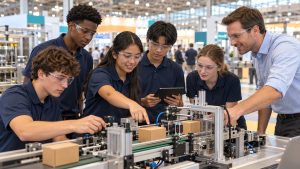
PACK EXPO International 2026 will put students on the show floor, not on the sidelines. From Oct. 18 to 21 at McCormick Place in Chicago, the next generation of packaging and processing professionals will build machines, demonstrate robots, race between exhibitor booths and meet potential employers, with six high school teams competing for up to …
Envapack.com went from 265,000 to 350,000 page views between August and September 2026. Here is what that growth means for its advertisers.
Sustainable packaging materials are reshaping how brands and machine builders work together, but cost and performance risk still slow the shift. That is the central finding of The New Material World: Packaging’s Path Toward Sustainability 2025, a research report from PMMI, the Association for Packaging and Processing Technologies. As end users move toward more sustainable materials, original equipment manufacturers (OEMs) are adapting their machinery to deliver innovative solutions without compromising performance.
Europe dominates the global cheese market, with a share of nearly 50%. Rising cheese consumption, an increasing variety of product formats, and new regulatory requirements are driving demand for packaging that protects cheese as a natural product while combining material efficiency, processability, and recyclability. This makes it increasingly important for manufacturers and packers to take a holistic view of the entire system – from the product and packaging to machinery, logistics, retail, and consumer use.
interpack 2026 sent a clear signal: the packaging industry is more closely connected, more innovative and more dialogue-oriented than ever before. This momentum was immediately visible in the exhibition halls. High visitor traffic, intensive discussions and a consistent international presence shaped the atmosphere. Everywhere, it was possible to experience the determination with which companies are working on solutions for the future. Ideas were discussed, tested and decisions were made. The entire value chain was presented in live.
Séval Schichtel, Sales and Business Development Manager, Ethylene, and Sebastian Lars Löscher, Business Development Manager, Purification, recently sat down with Kristina Morgan, Global Marketing Manager, Petrochemicals, at Clariant, to discuss how we’re enabling a circular economy where plastics are continuously reused rather than ending up in landfills, incinerators, or the environment.
As the leading trade fair for the international packaging industry, interpack will once again bring together decision-makers and experts from a wide range of industries in Düsseldorf this year. In the process, the wide spectrum of non-food products is the main topic. Whether screws, batteries, stationery, flower bulbs, electronic accessories, DIY or household products – the …
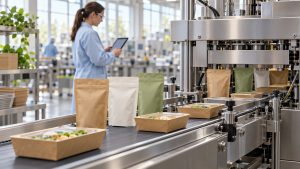
Futamura’s expertise in regenerated cellulose films, produced from renewable wood pulp from responsibly managed plantations has been instrumental in supporting Biopap®’s product development. NatureFlexTM films are used to line Biopap®’s carton board trays to provide excellent barrier to oxygen, gas and resistance to oils and grease. Futamura films are EU and FDA direct food contact approved. They also meet all the relevant standards for industrial composting, including EN13432, ASTM D6400 and AS4736. They are also certified for home composting according to OK Compost Home protocol, to the French standard by Din Certco and the Australian home composting standard AS5810. In addition, Futamura tested NatureFlexTM films for High Solids Anaerobic Digestion according to ISO15985:2004. The results showed that all samples could be considered as completely biodegradable under solid, anaerobic conditions.