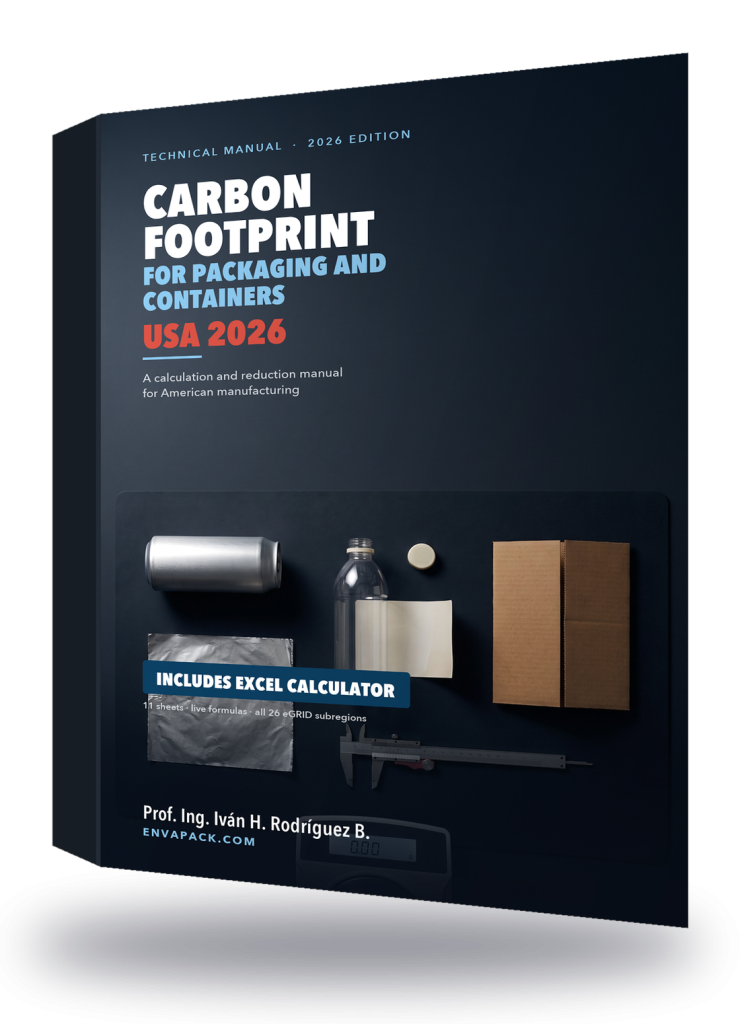
2026 Edition eGRID subregions · EPA factors · verified sources
Your packaging footprint changes by up to 6× depending on which eGRID subregion your plant sits in. This manual and calculator find your real number.
$ 420,000 One-time payment. Instant download.
When a customer asks for the footprint of your packaging, the answer usually comes from a supplier sheet, a European database or a spreadsheet somebody built from memory. All three produce figures that fall apart the moment anyone checks them.
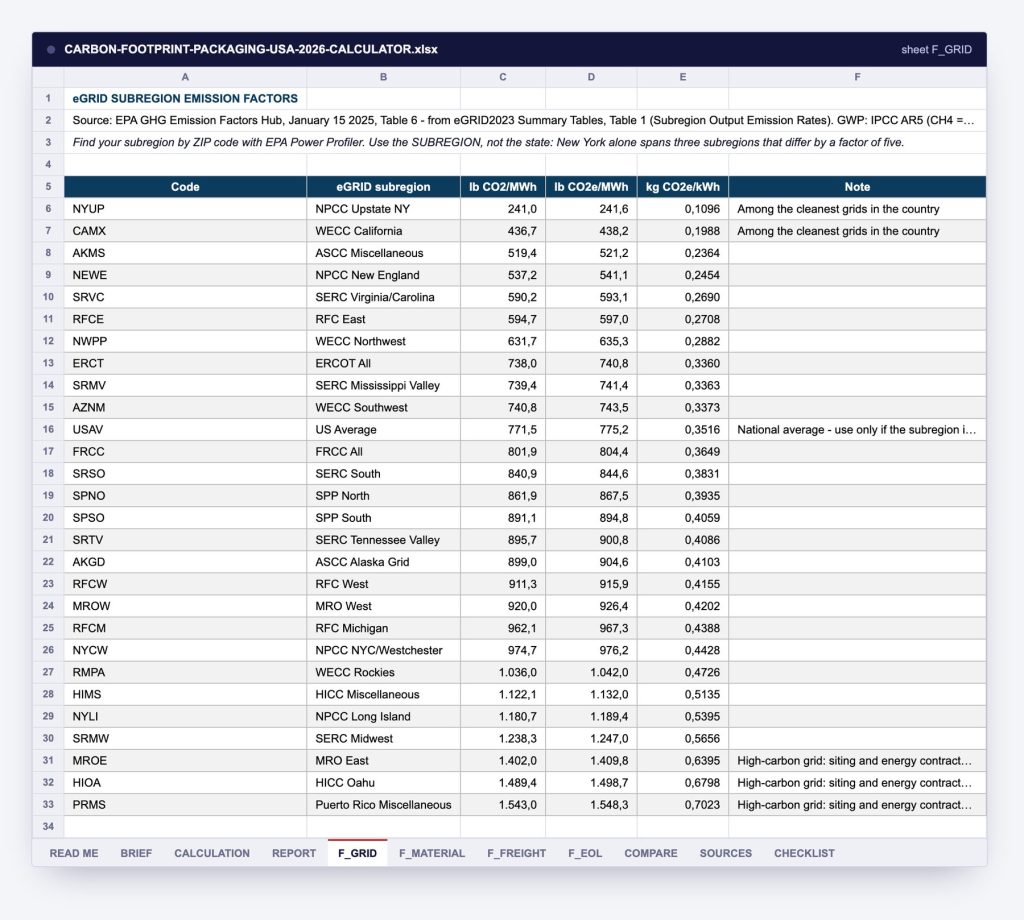
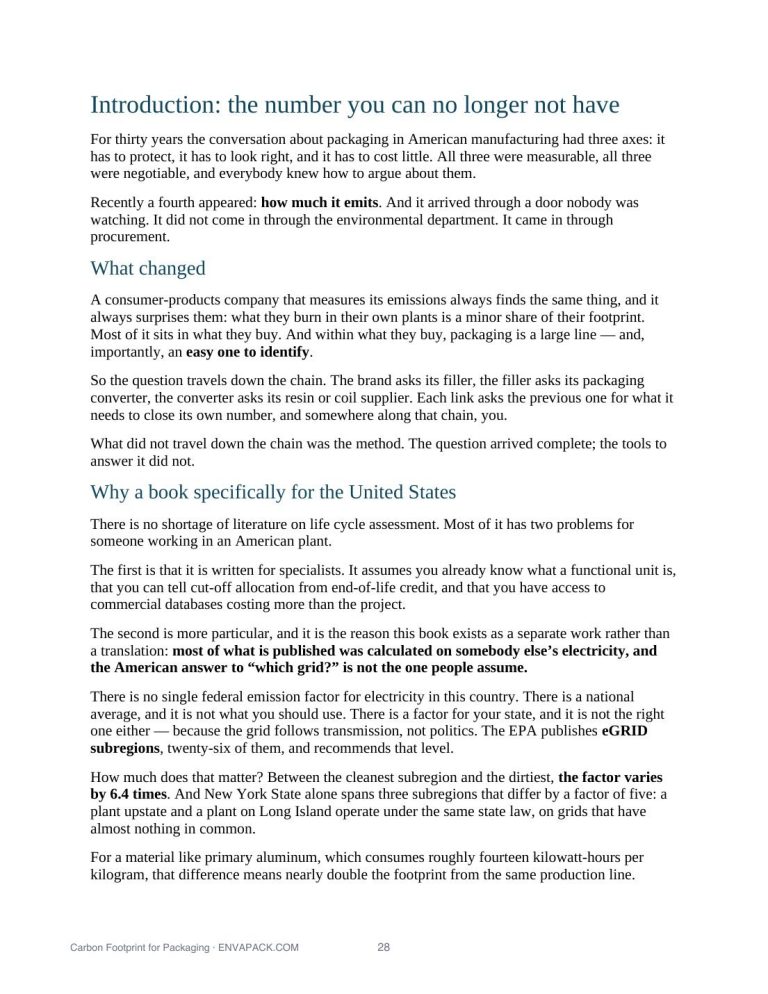
There is no single federal grid factor worth using, and the state number is the wrong shape. Electricity is dispatched by eGRID subregion, and the spread is brutal: 0.1096 kg CO₂e per kWh in upstate New York against 0.7023 in Puerto Rico. Same aluminum, same process, six times the carbon.
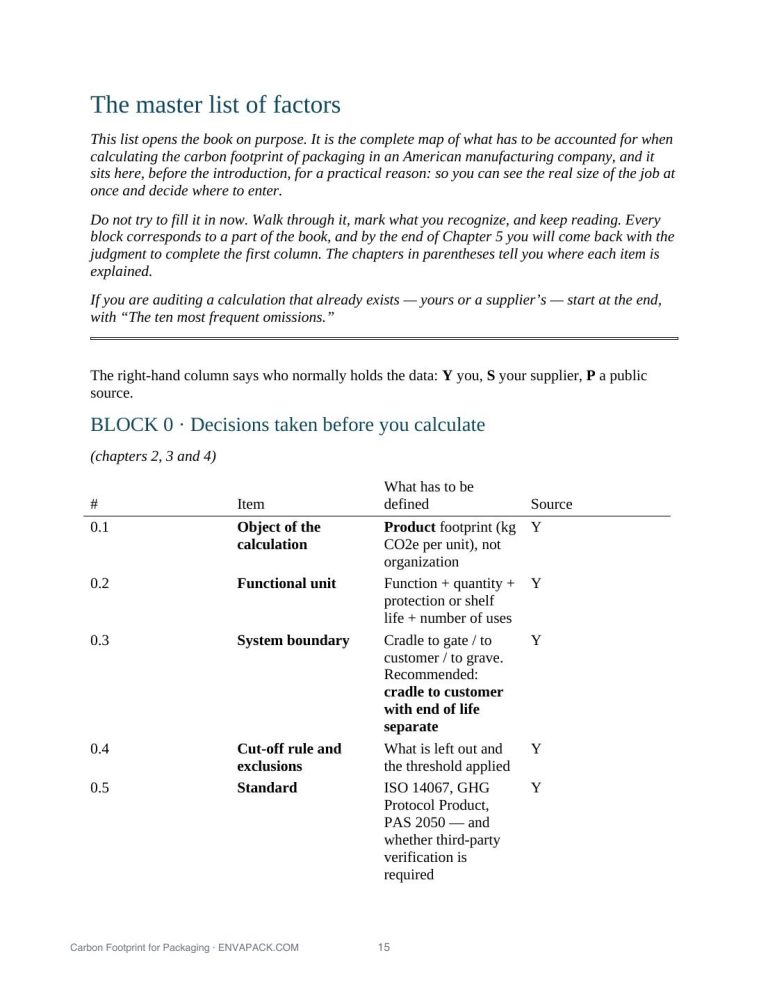
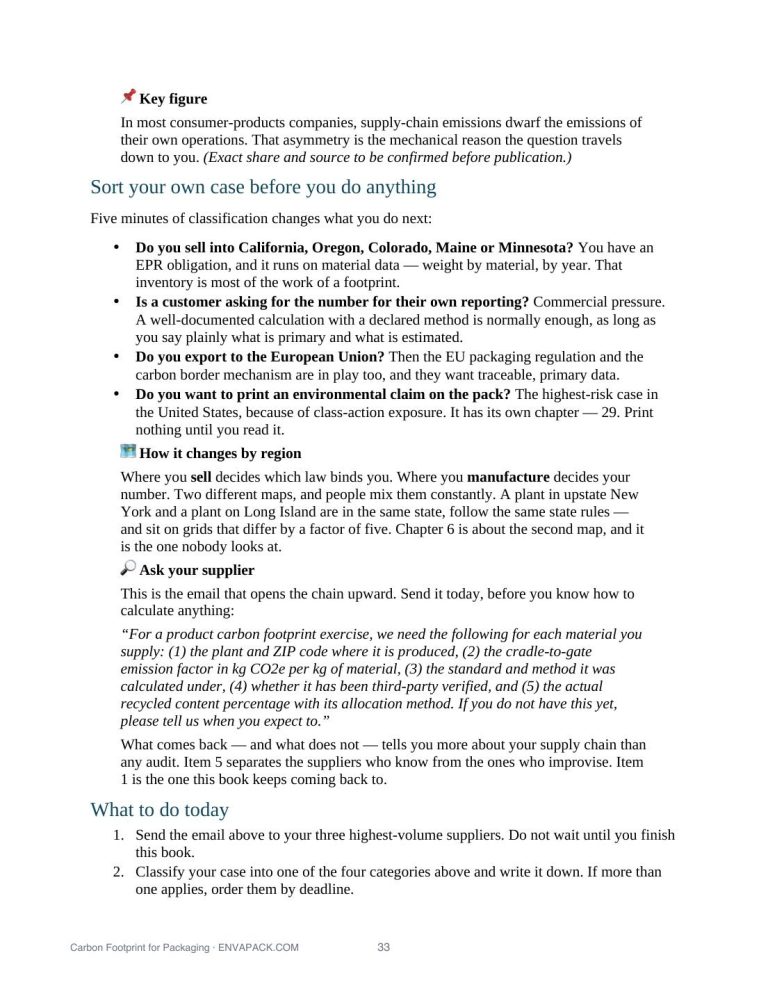
Your supplier hands you a cradle-to-gate figure and your customer demands cradle-to-grave. The second is always higher, and not because your package is worse. Before comparing two numbers, confirm they end in the same place.
Location-based and market-based are two legitimate methods and the GHG Protocol requires both. Reporting only the flattering one, or applying the residual mix to electricity you never contracted, is the error that gets a disclosure sent back.
217 pages · PDF and EPUB
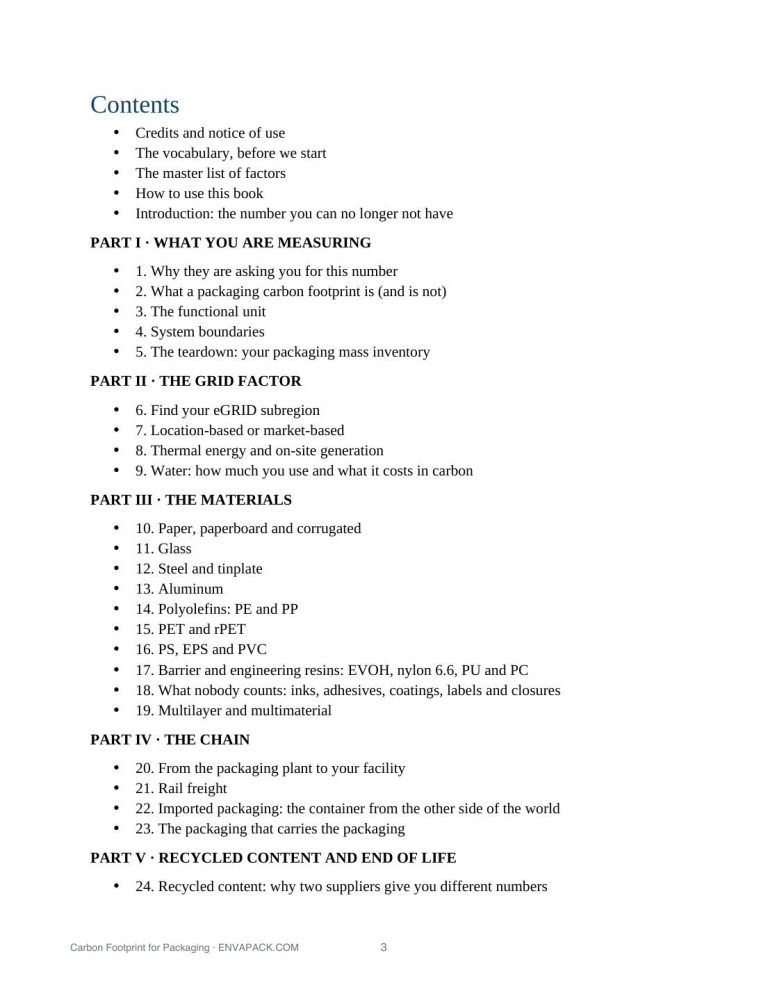
Six parts that take you from the vocabulary to a signed report: what you are measuring, the grid factor, the materials one by one, freight, end of life and the reduction path. Every chapter closes with what to do today.
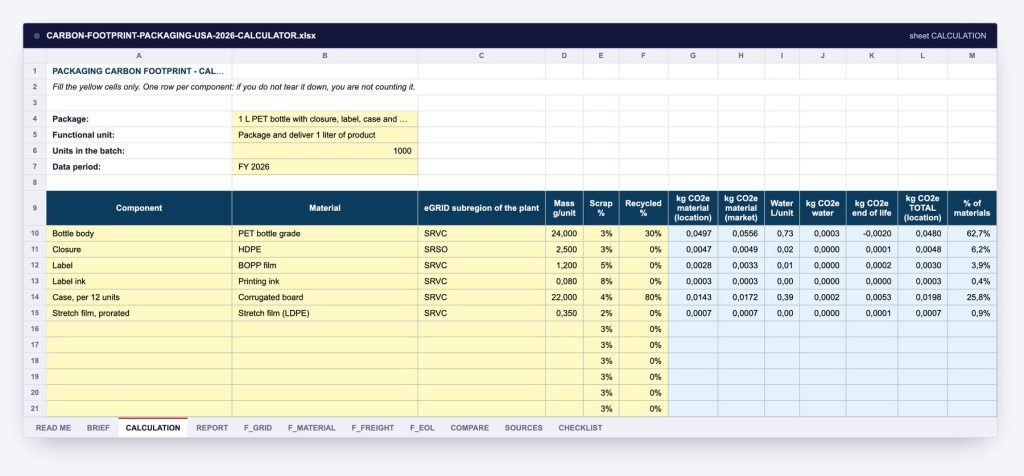
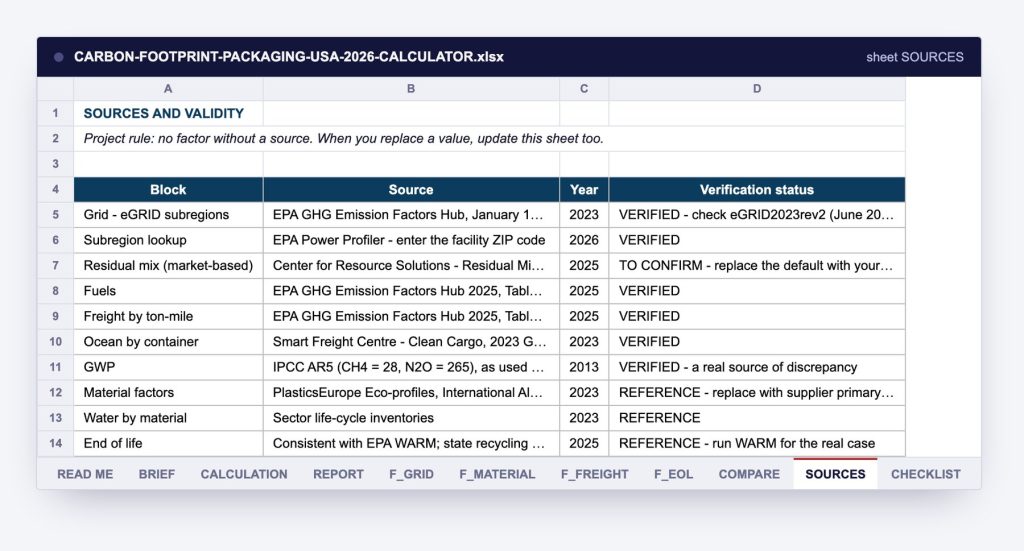
11 sheets · Excel with live formulas
Not a blank template: it ships with the factors loaded, the worked example filled in and the validations already set. You fill the yellow cells and the sheet computes materials, water, freight and end of life.
Yellow is what you fill. Blue is what the sheet computes. Nothing is hidden: open any formula and you can see where the number comes from.
This is the actual formula from the book, running on the actual factors from the calculator. Pick a material and a subregion and watch the same package change.
—
kg CO₂e per unit · materials only, before scrap
That is the whole point: The full calculator also handles water, freight to your plant, end of life, the market-based method and the report.
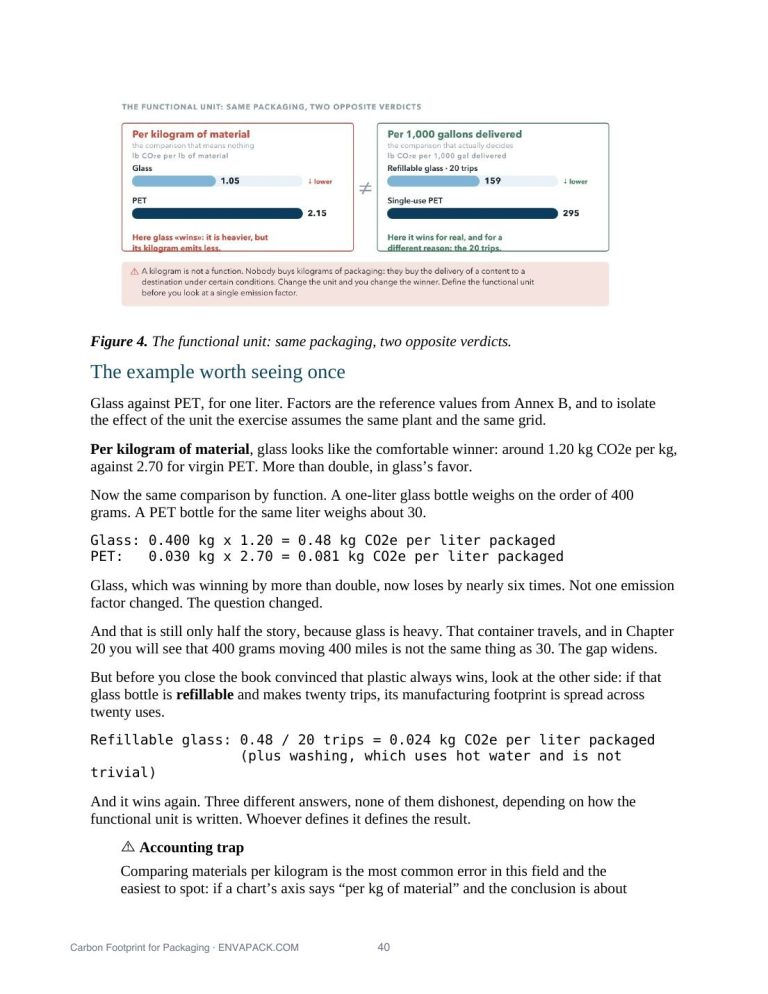
Real pages from the book, untouched.
You do not have to take anyone’s word for it. We send you a real extract of the book, as a PDF, and you judge it yourself.
No number in this book comes from a licensed database you cannot check. Values are marked either verified against the official source, or a reference range where no official figure exists. The grid factors come from the EPA eGRID release and the GHG Emission Factors Hub, with the version and the year written next to them, so you can update them yourself each spring.
Prof. Ing. Iván H. Rodríguez B. has spent more than four decades in packaging, between the plant floor and the classroom, and runs Envapack.com. The book publishes no client cases, because there are confidentiality agreements in the way, but it does publish the patterns: the mistake he has seen most often, and what usually happens when a plant starts calculating too late.
The full manual as PDF and EPUB, plus the 11-sheet Excel calculator. The download unlocks as soon as payment clears, on the same page and by email.
By ZIP code. Chapter 6 walks through it, and the calculator carries all 26 subregions with their codes, so you pick yours from a list rather than guessing. A plant in Ohio and a plant in Oregon are not on the same grid, and the book shows exactly how much that is worth.
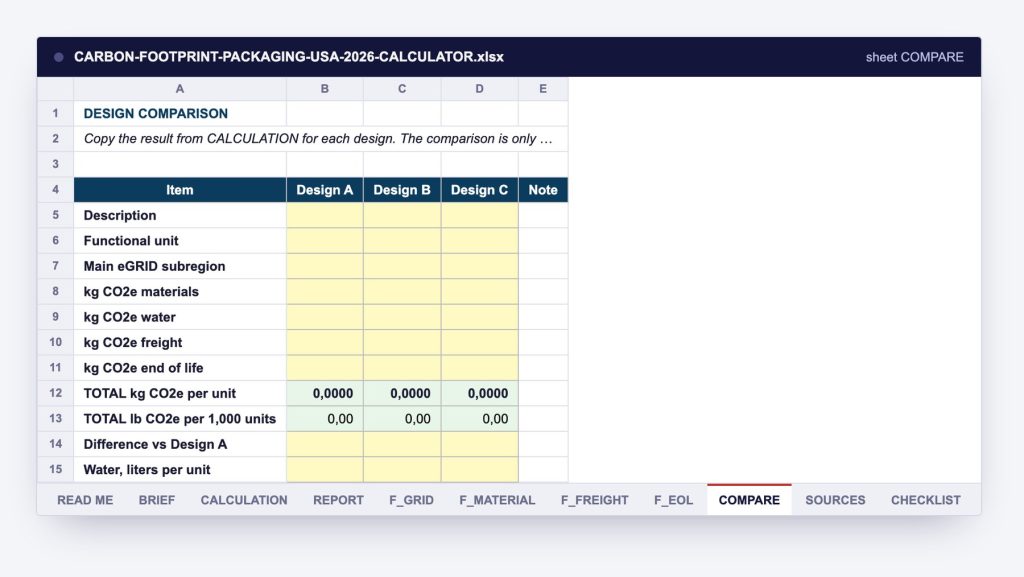
Yes, and it is a chapter of its own, because the GHG Protocol requires reporting both numbers. The calculator computes location-based and market-based side by side and applies the residual mix only to the electricity your contracts do not cover.
It gets you to a documented number with a declared method, which is what those regimes ask a supplier to provide. What the book does not do, and says so, is replace third-party verification when your customer or a regulator requires it.
It is built and tested in Excel. It opens in LibreOffice Calc and in Google Sheets, though a few list validations behave differently in Sheets. The formulas are visible and there are no macros.
The book carries import comparators for China, India, Mexico, Turkey and the European Union, because a great deal of packaging arrives that way, and the freight chapter costs the journey to your plant. If the packaging is actually manufactured in Canada or in Latin America, we would point you to those manuals instead: they are built on each region's own figures, province by province for Canada and country by country for Latin America. The Canadian volume also ships in English and in French, because both languages are mandatory there.
No. The body is written for whoever makes packaging decisions from procurement, quality or operations. The technical annexes are there for the analyst who wants the detail.

With the teardown in chapter 5 and the spreadsheet, you have your first defensible number in an afternoon.
$ 420,000 · One-time payment. Instant download.