

By: Ing. Ivan H. Rodríguez B director@envapack.com
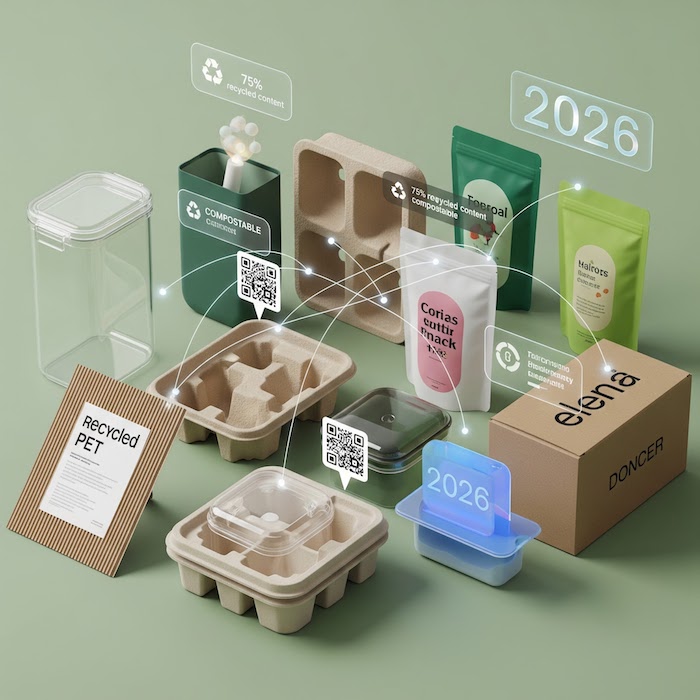
The packaging landscape is at an inflection point. Driven by rigorous global regulatory pressure (such as the European Packaging and Packaging Waste Regulation – PPWR) and growing consumer awareness, the industry is redefining its purpose. Today’s packaging must not only protect the product, but also be a vehicle of the circular economy, a source of digital information and a driver of the shopping experience, even in dynamic markets like Latin America.
Below is an analysis of the key trends that set the tone in 2026.
1. Sustainability as a Success Factor: Circular Economy in Action
Sustainability has been established as the strategic imperative, focusing on reducing the carbon footprint and eliminating waste.
A. The Recycled Plastic (PCR) Challenge
The integration of Post-Consumer Recycled Plastic (PCR) is key to reducing the use of virgin plastic. However, its use on an industrial scale presents significant challenges, especially in the food, beauty and personal care sector:
• Quality and Supply: Ensuring a consistent supply of high-quality PCR remains complex.
• Aesthetics: Quality varies, and high-quality PCR may develop a gray tint after multiple recycling processes, affecting consumer perception.
• Innovation: Companies like Unilever are investing in R&D and Artificial Intelligence tools to predict PCR behavior at the molecular level, overcoming the gray tint and meeting food safety standards.
• High Level Recycling: The industry actively seeks recycling suitable for food contact (rPE and rPP), meeting the highest hygiene standards.
B. The Revolution of Monomaterials and Fiber
To facilitate recycling, the industry is moving towards monomaterial or fiber-based solutions.
• Recyclable Flexible Packaging: Traditional flexible packaging (multi-layer) is difficult to recycle. Solutions like BOBST’s oneBARRIER offer high-barrier, single-material alternatives: PrimeCycle (polyethylene-based) and FibreCycle (100% paper-based). This innovation seeks to maintain product protection with a “ready to recycle” packaging.
• Barrier Fiber Materials: High barrier recyclable papers (anti-oxygen, grease, water vapor) are being developed, crucial to replace complex aluminum laminates in food packaging (coffee, broth) and in primary packaging for cosmetics.
• Reuse and Refill: Refill systems are gaining traction in the cosmetic sector, with solutions such as refillable bottles with integrated dispensing systems.
2. Digitization, Traceability and Transparency
Technology turns packaging into a means of communication and transparency, strengthening consumer confidence.
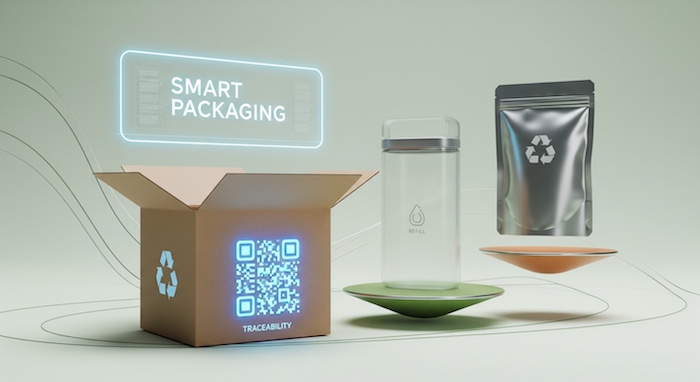
• Smart Packaging and Connectivity: Investing in technologies such as QR codes, NFC, sensors and Artificial Intelligence (AI) allows packaging to communicate the origin of the product, its environmental impact and the correct way to dispose of it.
• Environmental Transparency: Initiatives such as EcoBeautyScore establish systems to assess the environmental impact of packaging across the cosmetic product life cycle, driving brand responsibility and sustainable performance (Scope 3 emissions).
• Clean Labeling and Visual Simplicity: A visible trend in Latin America, which prioritizes minimalism and a smaller amount of technical information to facilitate purchasing decisions, especially in the digital channel.
3. Packaging as an Experience: E-commerce and Inclusive Design
Packaging design and functionality are key to loyalty and the supply chain.
• Sustainable E-commerce: The expansion of electronic commerce requires resistant, light and optimized packaging. The industry is focused on solutions that, in addition to protecting, offer a positive unboxing experience.
• Transit Testing: Companies like Mondi use ISTA-certified laboratories to simulate real-life supply chain conditions, ensuring packaging (such as paper envelopes replacing bubble wrap) withstands e-commerce logistics.
• Amazon Approval (APASS): Certification of packaging to meet Amazon requirements (FFP, SIOC) is essential to reduce the volume of packaging and logistics waste.
• Inclusive Design: In diverse regions such as Latin America, the integration of accessible elements, such as intuitive openings or improved ergonomics, is perceived as a competitive advantage and an expression of brand responsibility.
The production of sustainable packaging requires machinery capable of adapting to new materials and formats with efficiency and high hygiene standards.
• Flexible Machinery: Demand is focused on filling and packaging systems capable of managing the growing diversity of formats and processing new recyclable monomaterials (e.g. flowpack and traysealer solutions).
• Robotics for Hygiene – The use of HE (Humid Environment) robots and AI-assisted automation is increasing in high-demand environments, such as meat and fish processing, to ensure food safety and efficiency.
• Component Innovation: Auxiliary elements, such as energy-efficient and bio-based hot-melt adhesives, also contribute to reducing the CO2 footprint in the packaging process.
• Sustainable Finishes: On-demand metallization technologies (Ecoleaf) are implemented that reduce plastic consumption and CO2 emissions in cosmetic packaging.
In conclusion, the packaging industry is immersed in a transformation that requires co-creation throughout the entire value chain. Companies that manage to balance operational efficiency, product safety (especially in food), demand for circularity and customer experience will be the ones that lead the market in the coming years.